
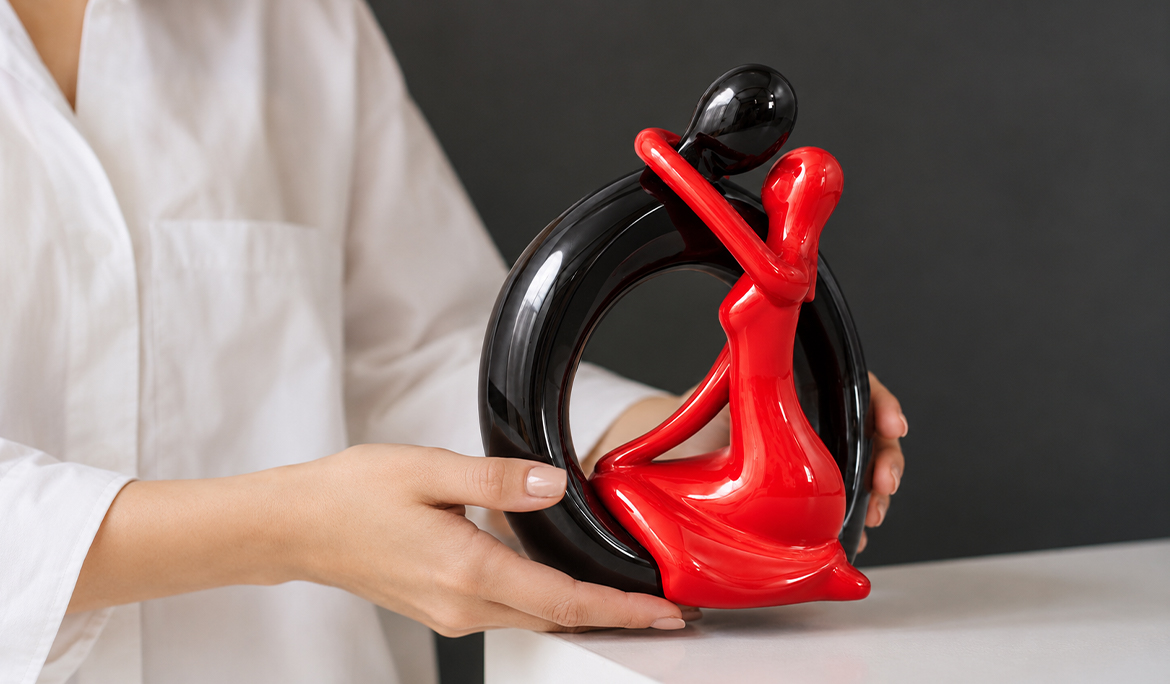
There is a strong chance that decor shopping turns a sensible adult into an enthusiastic collector of objects that they never even planned to own at the first place. You look at an interesting vase, sculptural bowl, candleholder, wall accent, or decorative figure and immediately, it starts feeling essential for your space.
Once you’re brought it home, you encounter the awkward question, which you should have probably asked earlier, “where exactly is this piece going?” This is the very question that forms the foundation of the “Where would I put this?” rule.
The rule is wonderfully simple. Before you purchase any decorative object , you must identify where you’re likely to place it in your home. Don’t just imagine a vague room. Quit thinking that you’ll place it somewhere in the shelf. Think about an actual surface, wall, corner, or even display area. With this tiny pause, the manner in which you purchase decor completely changes.
Emotionally, decor is unusually easy to purchase. Decor doesn’t need an immediate practical justification unlike furniture pieces. A dining table needs some space to stand. Chairs also need enough floor space. A cabinet needs dimensions that work with the room.
However, can you say the same for a decorative vase? You simply convince yourself that it will fit somewhere. This somewhere creates all the ruckus. Even if a decor is attractive independently, it can still be completely wrong for your interior.
Maybe it’s proportions conflict with you furniture, or its color introduces an unnecessary visual direction.. Or maybe it duplicates something that you already own. Without a destination in mind, you’re simply evaluating the object alone.
The placement rule forces you to evaluate the relationship between the object and your home. That is a far more useful standard.
When you’re considering an item, you need to mentally place it inside your room. Instead of saying that it will go with your living room, you must become specific. Ask questions like:
If you are considering wall decor, identify the actual wall. Imagine its width compared with the available area. Think about furniture positioned underneath it. Specificity exposes problems remarkably quickly.
You might realize that the console already contains several decorative pieces. The shelf you imagined is too shallow. The wall needs something much larger. The side table already has a lamp occupying much of its usable surface. Suddenly, an impulse purchase becomes a spatial decision.
Human beings are surprisingly unstable at estimating dimensions while shopping. A vase that looks moderately sized in a large display area can become enormous on a small table. A decorative sculpture that appears substantial online can look tiny against a wide console. Measurements eliminate much of this uncertainty.
Keep basic dimensions of important surfaces somewhere accessible. Record the width and depth of consoles, shelves, side tables, mantels, and other areas where you regularly place decor. For wall pieces, knowing the approximate available width can also help.
You do not need to turn decor shopping into an engineering project. Even rough measurements provide useful boundaries. Knowing that a shelf is narrow immediately prevents you from purchasing something that physically cannot sit there comfortably. Your measuring tape might become an unexpectedly effective shopping companion.
The rule is made even more effective by this one question: “If I bring this home, what am I removing?” Several homes lack editing, thus, the problem doesn’t lies in the number of decorative objects.
If you’re buying another vase when you already have several displayed, it doesn’t automatically improve the room. It simply tends to increase the number of objects that are competing for attention.
You must consider available display space as limited. Is the new object replacing something you no longer enjoy? The purchase then tends to have a clear purpose. Moreover, there is an identifiable opportunity, if the piece fills a actually empty area.
However, if you’re simply squeezing the object between existing decorations, you must reconsider the decision. Adding is easy, editing is often where stronger interiors emerge.
People frequently shop by style first. They see a beautiful object and ask whether they like its color, finish, pattern, or shape. But scale can determine whether that object actually works at home. Imagine a tiny decorative bowl on a broad dining table. The bowl might be attractive, but the surrounding surface overwhelms it.
Now imagine a massive sculptural vase on a narrow side table. The vase dominates its support and leaves nearly no negative space. Neither problem has anything to do with whether the objects themselves are appealing. Before buying, compare the item's dimensions with its intended location.
Ask whether it will look substantial enough, whether it will overpower nearby furniture, and whether surrounding objects will have enough breathing room. Good decor depends on proportion as much as appearance.
Placement is not just about where something physically sits. It is also about the position from where you see it. When you’re placing a decorative object on a console, it may be visible from the entrance, sofa, dining area, and even hallway. Something that looks amazing from the front, may seem to be boring or awkward from the side.
Visibility must be considered before you purchase any three-dimensional object. The following questions are crucial:
This becomes especially important in open layouts, where decorative arrangements are often visible from several directions. Your intended viewing angles should influence what you buy.
The same principle works beautifully for artwork, mirrors, clocks, frames, and other wall pieces. Before buying, identify the wall. Then think about what surrounds it. A small wall accent floating above a large sofa can appear disconnected. A wide decorative piece squeezed onto a narrow wall can make the area feel compressed.
Wall decor should relate to both the wall and nearby furniture. Try mentally outlining the dimensions before purchasing. At home, you can even use removable paper to represent the approximate size of the object. Seeing the proposed footprint makes abstract measurements much easier to understand.
The goal is to avoid discovering proportion problems after the purchase arrives.
Some decorative objects fit but make daily routines irritating.
A large centerpiece may look impressive on a dining table until everyone has to look around it during conversations. A collection of ornaments on a coffee table may look layered until you need somewhere to place a cup.
A decorative tray might occupy exactly the area where keys, glasses, or everyday objects usually land. This is why the placement rule should include function. Ask what normally happens in that location.
Do people walk past it closely? Does the surface get used daily? Does the area need regular cleaning? Are objects frequently moved? Decor should work with your routines rather than creating an obstacle course around them.
Once you start using the placement rule regularly, you may naturally develop a mental map of your home. You begin remembering which areas actually need something. Perhaps one wall lacks visual interest. Maybe the dining table needs a stronger centerpiece. A shelf might need one taller object to balance several shorter pieces.
Now your shopping becomes targeted. Instead of wandering through decorative objects asking, “Do I like this?” you start asking, “Does this solve the visual problem I already identified?” That shift is powerful. You are no longer searching for attractive objects without context. You are searching for specific pieces with jobs to perform.
What happens when you find something you adore but cannot identify where you would put it? Wait. Take a photograph if permitted. Record the dimensions. Go home and examine your rooms.
Perhaps you will discover exactly where it belongs. Perhaps you will realize you already own something similar. Or perhaps the excitement will disappear once the object is removed from its thoughtfully arranged display environment.
Waiting does not make decorating boring. It creates distance between attraction and decision. And that distance can prevent your cupboards from becoming retirement homes for decorations that never found a proper place.
The “Where Would I Put This?” rule is ultimately about intentional decorating. Before buying, identify the location. Check dimensions. Consider surrounding objects. Think about scale, sightlines, available space, and everyday function. Decide whether the new piece adds something meaningful or simply adds another object.
You can still buy unusual, playful, dramatic, or completely unnecessary decorations. Decor does not need to justify its existence through practicality alone. It simply needs somewhere to belong. Because the difference between an exciting decorative find and future cupboard clutter can sometimes be one question asked before checkout:
Where would I put this?