
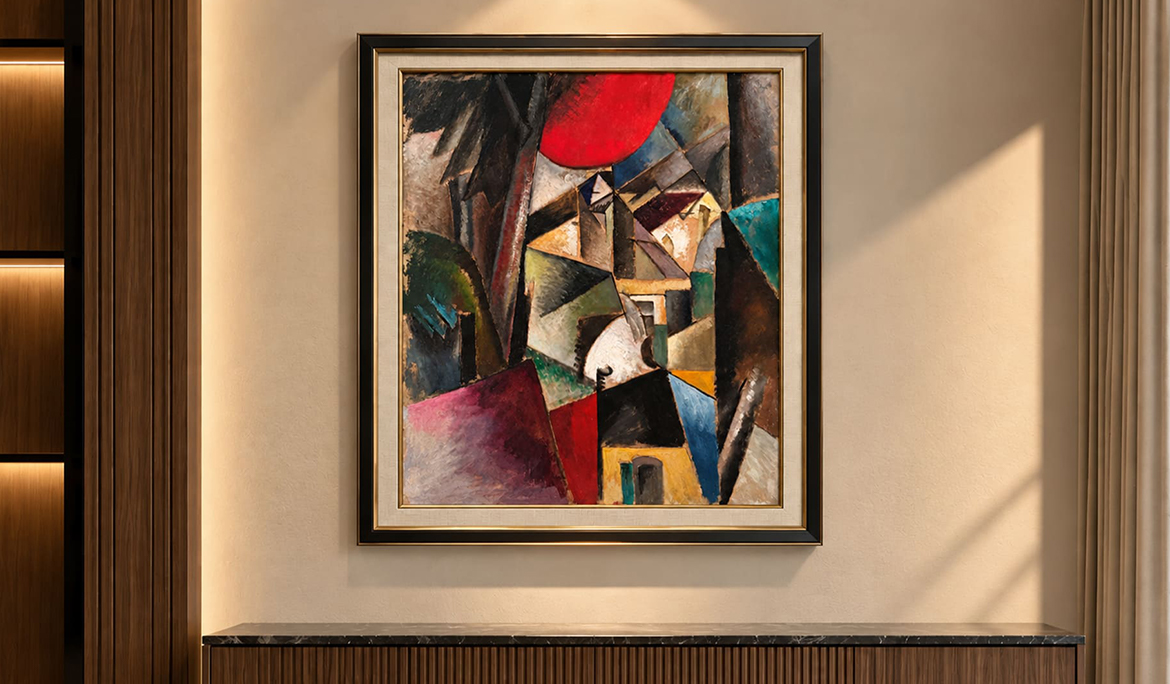
An innocent thought marks the start of a room decor. The thought that your room just needs something. Then the trouble starts. The real question that’s raised is whether that “something” means one dramatic sculpture, an oversized piece of wall art, or a striking vase that can immediately command the room. Another way to go is to use a collection of smaller objects including cushions, bowls, frames, candles, trays, and table accents, working in sync.
With both approaches, you can completely alter the way your space feels. However, they do it through very different visual mechanisms. When you understand such differences, you can decorate with greater intention. Besides, you can avoid unnecessary clutter and create a room that feels actually finished rather than merely filled.
The physical size of a decorative item is merely a part of its overall decorative impact. The visual weight really matters here. This means how strongly something attracts attention, when you enter a room.
Substantial visual weight is carried by a large sculptural object. The scale of such an object makes it difficult to ignore. Nevertheless, even a smaller object with an unusual shape, contrasting texture, bold patterns, or unexpected placement can also become visually dominant as well.
If you’re using ten smaller accents, it can help in distributing the weight across several locations. Let’s imagine a plain console table here. You can place one tall sculptural vase in the center, and you’ll see that your eyes immediately know where to go. If you’re replacing the same thing with several smaller objects of different heights, shapes, and textures, your gaze suddenly starts moving between them.
You can’t claim that neither arrangement is inherently stronger. Simply put, they create different viewing experiences altogether. One establishes a destination, whereas, the other creates a journey.
Statement pieces can concentrate attention, making them so attractive. An oversized artwork, dramatic floor vase, unusual mirror, sculptural lamp, large decorative object, or another item with enough presence to influence the surrounding space, can make a striking centerpiece .
The immediate hierarchy of such objects is their biggest advantage. What deserves attention first is not at all confusing when you’re entering a room with such an object. Everything around it tends to be quieter, which allows the focal object to establish the visual identity of that area.
In rooms that already contain strong furniture silhouettes or architectural details, this technique can be particularly helpful. You don’t need to introduce several competing decorations, rather one substantial accent can provide the necessary character, without fragmenting the composition.
Restraint has something clearly refreshing regarding itself. With a single large objected surrounded by an open space, you can easily make the overall decoration appear far more deliberate. Moreover, the empty area around it naturally becomes a part of the overall arrangement. With the negative space, the eye gets somewhere to rest!
Let’s suppose that you have a large blank wall. You have the liberty of placing ten frames across it, or of hanging a substantial artwork. Both options tend to occupy the same general area, but they tend to affect your perception differently.
With a collection, you can segment the wall into multiple visual units, wherein, your attention moves from frame to frame. This means you’re looking into individual details and relationships. The large artwork on the other hand, makes sure that the wall is considered as nearly one composition.
Thus, at times, scale can create a greater perceived transformation than quantity does. When you’re using a large decorative item, the perception of the proportions of the room around it changes drastically.
Ceiling height can be emphasized using a tall floor sculpture. A narrow wall appears to be more substantial, with a wide artwork. A confined area expands visually, if you’re placing a mirror in it. This object is not simply decorating the room, rather it’s interacting with its proportions.
Small accents operate through accumulation. Even though, individually a candleholder, cushion, small vase, decorative bowl, or a picture frame may not radically change a room, collectively they can. These small objects have the ability of building layers of color, texture, shape, and personality.
With this approach, you can enjoy greater flexibility. Besides, you can repeat colors across different parts of your room. A tone appearing in a cushion might return in a vase and then appear again in an artwork or decorative tray.
With this repetition, visual connections are created. If you’re looking for a room that feels collected rather than centered around one dominant object, small accents are useful. The decorative idea quietly travels around the space, instead of shouting from one location.
However, one challenge is knowing when to halt. Small objects tend to appear harmless individually, thus, it makes it surprisingly easy to keep adding them, until every available surface becomes occupied. This can turn layering into unnecessary visual noise.
Every room has its own clutter threshold. At this point, any kind of additional decor must halt! It quits adding character to your space and makes it hard to visually process altogether. Depending on your room, this threshold can vary enormously.
A space containing patterned furniture, visible shelving, textured fabrics, detailed architecture, and multiple colors may reach visual saturation quickly. A restrained room with plain surfaces and neutral furniture may accommodate more decorative layers.
This is where the one-piece approach often has an advantage. Instead of spreading decorative information everywhere, it concentrates it. With multiple small accents, editing becomes more important. Ten objects should not necessarily mean ten unrelated ideas.
Successful groupings usually contain some form of connection, such as repeated materials, complementary shapes, similar tones, or coordinated proportions. Without that relationship, the room can begin to resemble a storage area rather than an intentional interior.
Statement pieces no doubt excel at creating an impact. But smaller accents help you reveal more personality. Let’s take an example of a shelf containing a small sculpture, framed print, textured vessel, stacked books, and an unused decorative object.
A fragment of information is contributed by each piece. When combined, they can make your room feel developed gradually, rather than decorated all at once. In spaces where warmth and individuality matters, this works even better.
Shelves, side tables, coffee tables, consoles, desks, and bedside surfaces naturally lend themselves to smaller compositions. The secret is variation. If every object is roughly the same height, the arrangement can look flat. Mixing tall, medium, and low objects creates rhythm. Combining rounded forms with angular ones adds contrast.
Spacing matters too. Objects need room to exist independently. Packing every decorative item tightly together can erase the individuality that made each piece interesting.
Buying a dramatic decorative object does not automatically create a dramatic room. Placement decides whether the object becomes a focal point or an oversized inconvenience. A statement piece needs enough surrounding space to be seen clearly. If it is squeezed between large furniture, busy patterns, and several other strong decorations, its impact becomes diluted.
Contrast can help. A sculptural object against a relatively simple wall becomes easier to notice. An oversized vase on an uncluttered console gains greater presence. A large artwork above restrained furniture can establish a strong visual anchor.
Think of the surrounding area as a frame. The statement piece is only half the composition. The space around it determines how loudly it speaks.
Here is where the debate gets interesting. Some of the strongest rooms use both approaches. Start with one dominant object to establish hierarchy. Then introduce a restrained number of smaller accents that support rather than compete with it.
For example, an oversized artwork might become the focal point while several smaller objects repeat colors or shapes found within it. A sculptural vase could dominate a console while two quieter objects create balance beside it.
Think in levels:
Primary: the object you notice first.
Secondary: accents you discover afterward.
Background: quieter elements connecting everything together.
Once every decorative object tries to become the primary feature, the room becomes visually argumentative. Good decoration knows when to speak and when to whisper.
If the goal is immediate visual transformation, one well-scaled statement piece can have remarkable influence because it establishes a focal point and can reshape your perception of the surrounding space. If the goal is layering, flexibility, and gradual personality, multiple smaller accents provide more opportunities to distribute detail throughout the room.
The smarter question, therefore, is not simply whether one object beats ten. Ask what the room currently lacks. Does it feel scattered? A dominant piece might give it direction. Does it feel empty or impersonal? Smaller accents could introduce layers and visual connections.
Does it already contain plenty of detail? Adding another collection may create unnecessary competition. Decoration becomes far easier when you quit counting objects and start thinking about relationships between them. A room does not remember how many pieces you bought. It remembers, visually speaking, where you gave the eye somewhere interesting to land.